
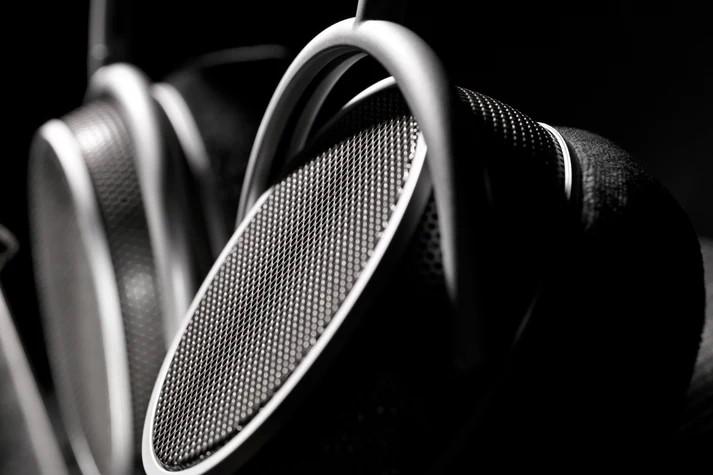
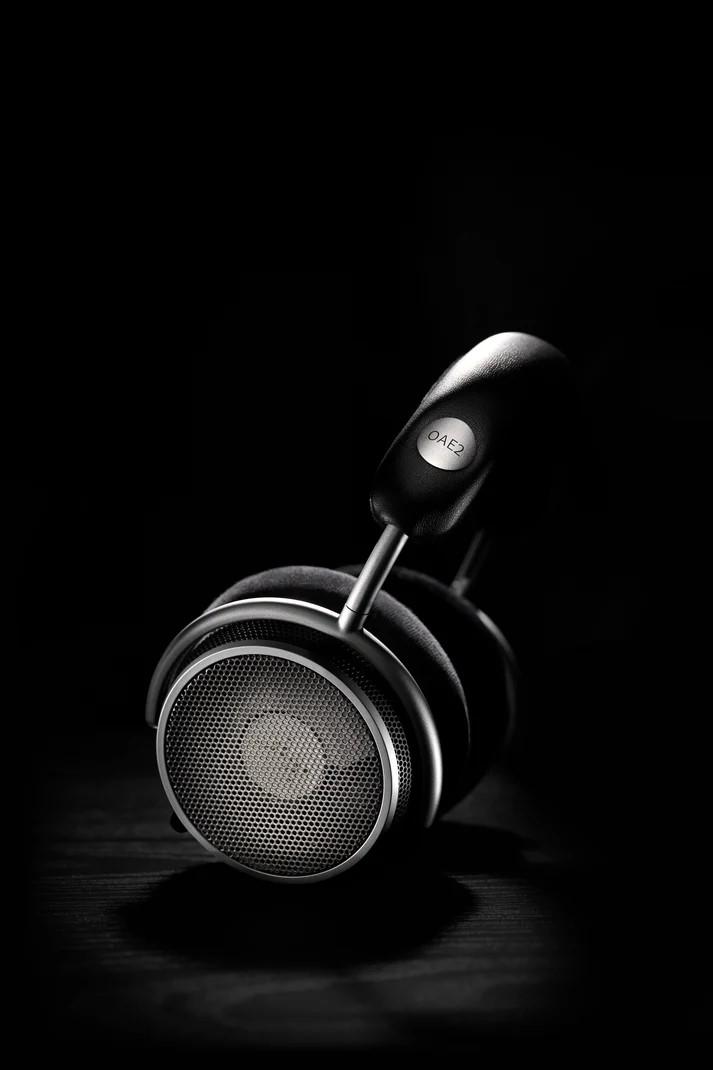
Grell Audio, founded by Axel Grell in 2020, released its second product earlier this year, an updated version of their first headphone, the OAE1, simply named the OAE2. This is a mid-priced ($599) open-back dynamic driver headphone, centered around a technology which Grell calls Front-sided Sound Field Modulation (FSFM). Grell are marketing the OAE2 as an evolution in headphone design (according to the site, there is a patent pending), made to deliver a distortion free, natural listening experience more comparable to sitting between two loudspeakers.
Axel Grell is well known to the personal audio community, as he, during the three decades spent designing headphones for Sennheiser, developed a line of products that remain a part of the ongoing dialogue today. I owned one of the HD600 series years ago, and it’s still on the short list. The HD800 is still inspiring designs today, and is prized for its exceptional imaging and scale. Grell has been experimenting with transducer placement and angle for years. The OAE2 is the result of his and his team’s expertise and deep well of experience. If you are interested in more of the science behind the OAE2, check Grell Audio’s YouTube channel.
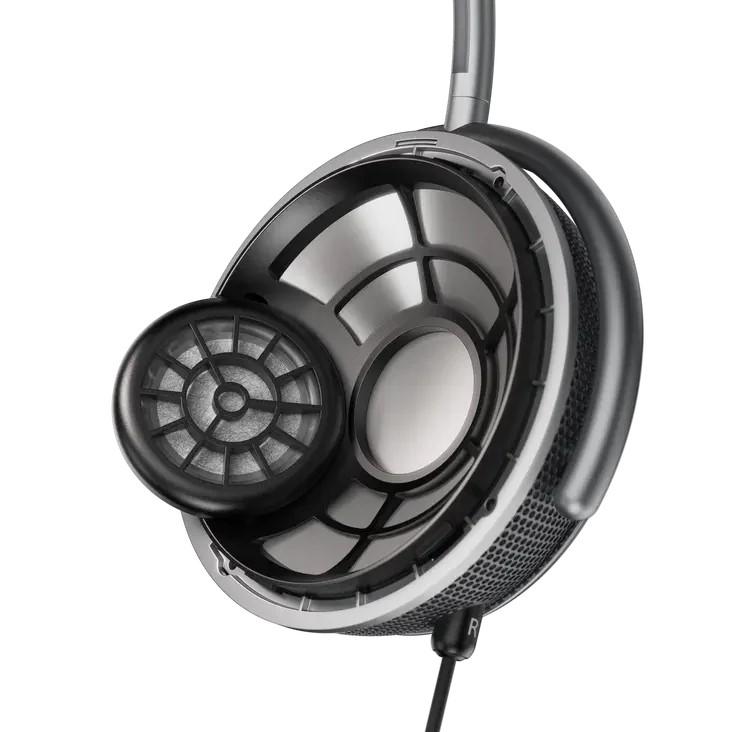
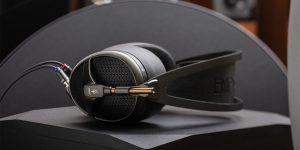
At the center of this design is a 40mm bio-cellulose driver mounted at the front of a large baffle, angled toward the listener’s ear. This allows the signal to interact with our pinna as sounds do in the real world or when listening to loudspeakers. Traditionally, with a few exceptions, headphone drivers are positioned directly over our eardrums, beaming the sound in, removing our ear and head shape from the experience. This can contribute to a headphone sounding unnatural, high frequencies in particular. This transducer has been tuned to lower its resonance frequency to 40hz, ensuring wide-open, distortion free (0.05% at 1 kHz, 100db) performance across the entire spectrum (12 – 34,000 Hz (- 3 dB), 6 – 46,000 Hz (- 10 dB)). The plastic earcup and steel screen were designed to support the low frequencies with an approach to damping that is unique to the OAE2. Grell is keeping quiet on how they have accomplished this. The outsized baffle allows for unrestricted airflow, contributing to its widescreen projection and remarkably uncompressed sound. This overall design and the materials used each contribute to the impedance and sensitivity of the headphone (38ohm/100db at 1kHz, 1 VRMS). The driver angle, baffle and open earcup design were chosen to deliver a more natural experience that is outside the listeners head, and to address the challenges that come with traditional open-back designs, like low frequency extension and presence.
So, this is something like ultra-near-field listening, though not precisely. The OAE2 doesn’t sound like a loudspeaker because it isn’t one. They aren’t sitting on a desk or on stands, interacting with the floor and walls, etc. So, while this is similar to near-field playback, because the headphone takes advantage of how we naturally hear and process sound, perhaps it is better in ways because, for one, the room is removed from the equation.
Design
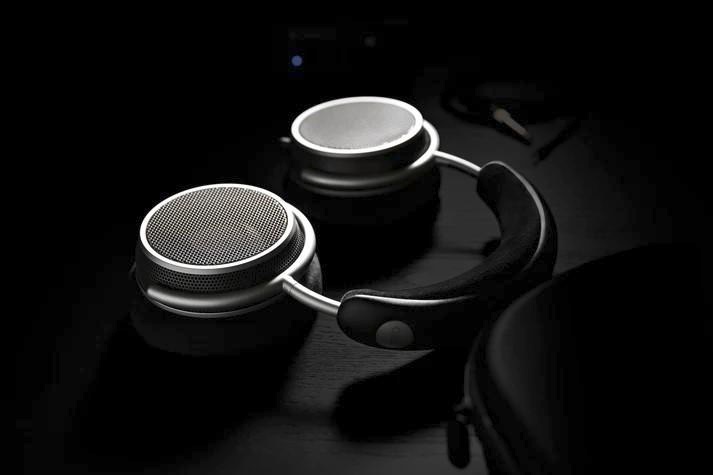
As for the overall design and fit, the OAE2’s large plush pads are quite comfortable. The clamping force is firm (2.5 N) but tempered by those black velour pads, and I had no issue with comfort over day long sessions. It’s possible they might warm up some depending on the listening environment. The headband is also comfortable, though after many hours I could feel a bit of pressure building at the center-top of my head. I suspect over time the headband will soften as it breaks down and become more comfortable. Only experience will tell you if they’re a good fit for you. The yoke posts slide smoothly with firm pressure, away from the headband and stay put. The headphone is relatively lightweight (378g), and I found it to be very comfortable overall, though it doesn’t reach the levels of comfort other more luxurious models from manufacturers like Meze Audio or Dan Clark Audio do. Like Meze’s headphones, the OAE2 is a modular design and all parts are replaceable, ensuring long life. Very cool. Well done, Grell. Finally, I find the overall aesthetic appealing.
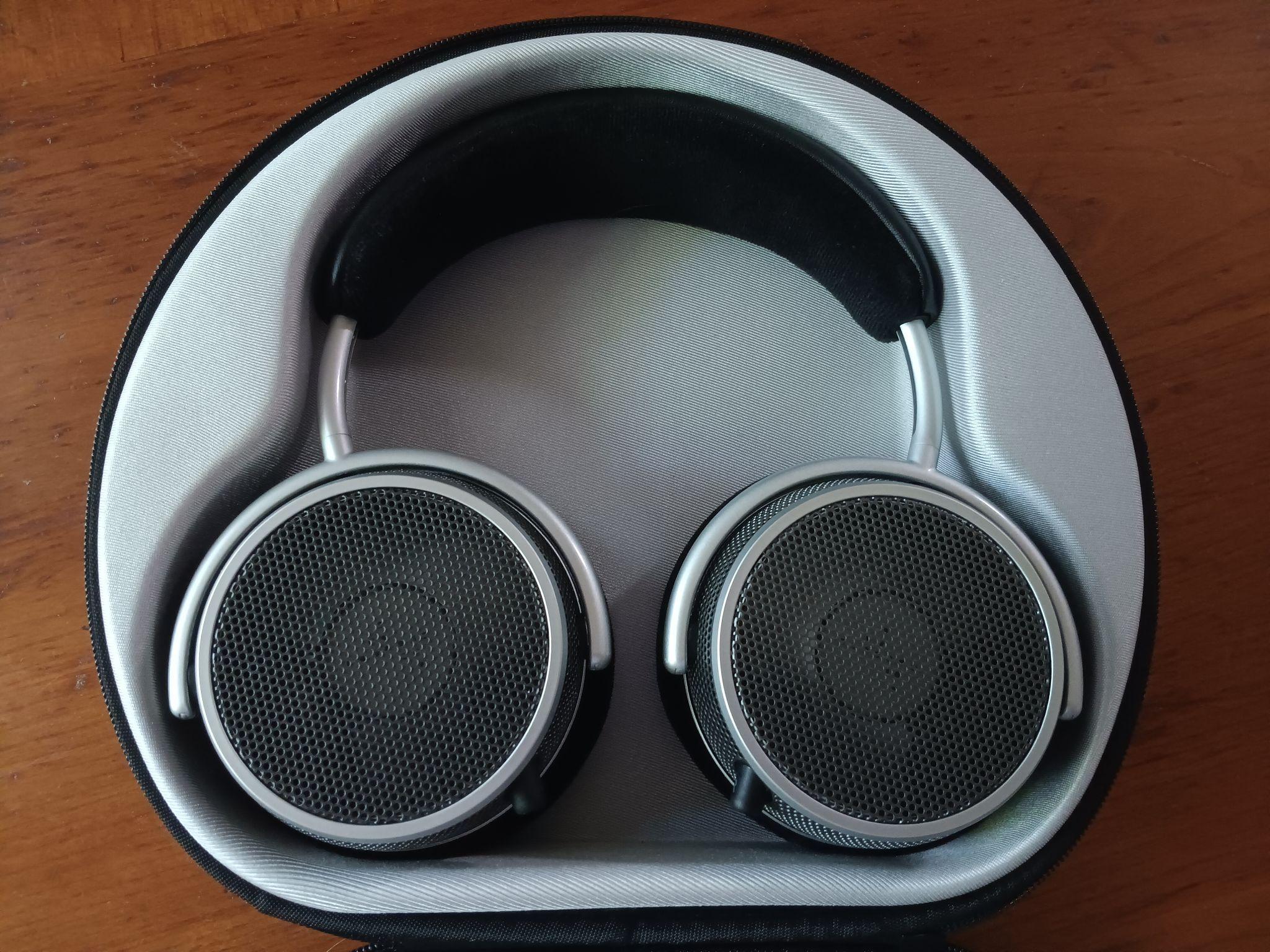
The OAE2 comes with a good quality textured case, that is solid, flat and wide, and stores the headphone with the cups folded flat. The case has a molded, removable insert that should protect the headphone well enough in transit or storage. Two 2m cables are provided: one with a 3.5mm amp-end connection, along with a 3.5mm>6.3mm adaptor, and another 2m cable with a 4.4mm balanced amp-end termination. On that, the OAE2 cable’s headphone side is a single-ended 2.5mm 4-pole connector that attaches to just one earcup. Listener’s choice. Both cups have an available input. The textured cables are lightweight, non-microphonic in most situations, and are less troublesome (they behave like fabric, wind fairly easily and avoid kinks) than some other cables I’m familiar with. Overall, I find the included accessories more than adequate for a product in this range.
Summing
Timing is everything. For me, very high efficiency in a headphone or loudspeaker is priority one. My reference for playback is live music. Four decades of live concert experiences and active listening, and perhaps half that time playing and recording music in a variety of low places. A 100db+ rating for a transducer is key for truly lifelike, affecting playback. A speaker can roll-off at the extremes and be thrilling if its dynamic expression is exceptional. The reverse is not true. The smallest of transients need to be transmitted, please and thank you. One man’s perspective. As a bonus, those uber-responsive headphones have a wider range of amplifiers with which they can be paired. Of course, this is an oversimplification. I do want it all, it’s just that I can’t afford it. It is a real trick for a component to do everything well, especially when it is reasonably priced. A remarkable balancing act. High-wire antics. The Grell Audio OAE2 is one such act that’s not to be missed. I’ll attempt to illustrate why here in a sec. First, I’ll sum up, for those who’re ready to move on.
The Grell Audio OAE2 is an exceptional headphone. Immediacy, stellar dynamics, wide bandwidth, low distortion, and widescreen imaging are all on offer. Its voice is wide open, whisper to full-throated roar, and not only the midrange, which is colorful, clear and textured, but across the entire spectrum. Low frequencies are powerful, agile and contoured. The high frequency texture is excellent, and I have not experienced any of the fatigue that comes from being strapped into a pair of headphones all day. It is handsome, comfortable, and fully serviceable. It’s reasonably priced. Add to this the fact that the aperture through which we hear/see the OAE2’s projected image is completely free of compression, the image solid, untethered, and at times, when the recording provides, freaky dimensional. The AMP-23R is no slouch; system synergy is key, as always.
This new design is not about spectacle, not some manipulation intended to thrill listeners. I’ve seen lots of chatter around the headphone, focused on image and scale, etc. The design is intended to recreate how we naturally experience sound, or in this case playback. The short story is that it just works. By my ears, Grell Audio has succeeded in reaching their goals for the OAE2. If your measure for music reproduction is live music, and/or you spend equal time between two loudspeakers, then there may not be a need to adjust to the OAE2’s sound. For those whose exposure to music and playback is limited to traditional headphone design, the experience may be different. You won’t know ‘til you do. As for whether or not the OAE2’s voice is for you, I encourage you to sit with them.
Listening
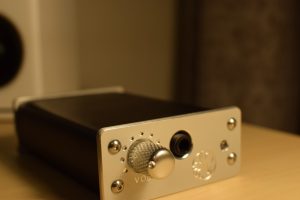
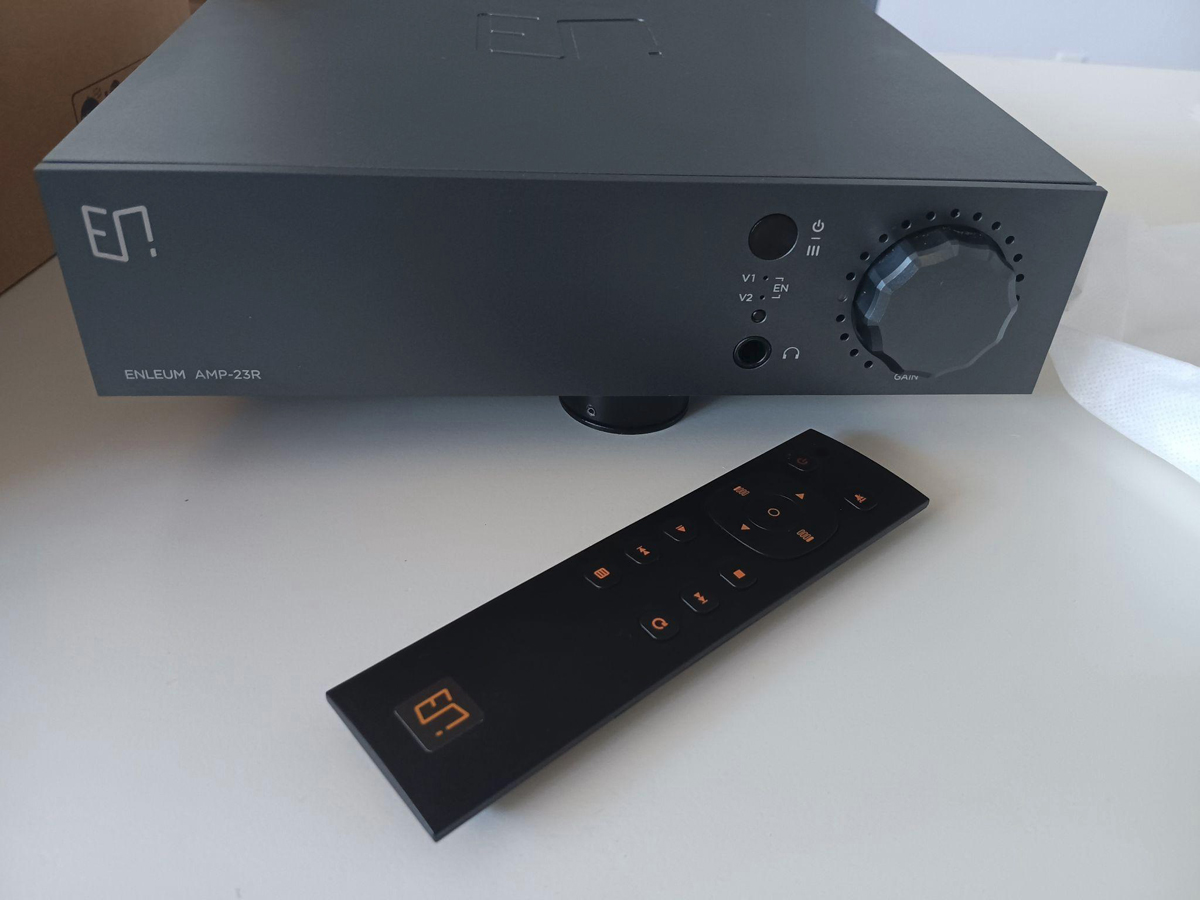
My desktop system is centered on the Enleum AMP-23R, Schiit Yggdrasil (v1+A2+Gen5USB), and Eversolo DMP-A6 as a dedicated streamer. AudioQuest power products and cable tether it all to the ground. Qobuz is the source of choice.
I have an active playlist on Qobuz that gets regular updates, and I do use it (though not exclusively) for evaluating components:
https://open.qobuz.com/playlist/64800674
** I ran the OAE2 for 100+ hours before getting in deep **
TV on the Radio
“A Method”
I like this tune for its percussion and vocals. When the rhythm hits at 01:45, it reveals the headphones speed, low frequency agility and power. The cymbal panned right has the expected weight, color and metallic sheen, illustrating how well it handles high frequency texture. Above that foundation, the multiple vocal parts are spread wide. Layering is impressive. Timbral fidelity, again, more so. For example, the hand claps sound appropriately fleshy.

Björk
“Headphones”
I’ve been revisiting the early Bjork records. This tune also has multiple vocal parts spread across the stage. The OAE2 projects a large, impressively deep image. Reverb and delay trails are easily tracked and despite all of the many parts and rhythms in motion, the system draws a cohesive image. I can feel the low freq synths but still they remain upfront, or “on screen” and outside the head.

Rival Consoles
“Johannesburg”
The rhythms are insistent. Relentless. The image is widescreen. Agility and control. Each of the synth layers remain distinct, the stage depth bottomless in that way electronic music does darkness. I’m wanting to turn it up, though I’m already at my limit.
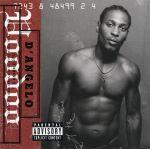
D’Angelo
“Playa Playa”
This record sounds so good. Again, multiple vocal parts mixed in among the instruments. Lots of low frequency information here. Bass on the right, drums the left. No mud. The headphone presents, if I lean in, an almost distracting amount of texture but again well-balanced against the larger image. Despite so much going on, the groove remains intact. Remember when listening to records was fun? Today, we at times hear certain hififolken use the word almost apologetically for components that aren’t performing up to their expectations. I think any piece of gear that makes you forget about mechanics just might be great.

Liv Andrea Hauge Trio
“Asta”
I can’t quit you, Ville Blomster. I talk about this record a lot. Sorry. The OAE2 handles the group interplay very well. With the Grell in line, any record that is recorded live has my full attention. This one more so.

Punch Brothers
“Familiarity”
A great example of performers with uncanny ability. Facility. The OAE2 keeps up throughout this sprawling tune. Again, timbre and texture are convincing, separating instruments and voices from one another without breaking the glue. I’ve got the volume goosed again, but there’s no compression that I notice, even around 02:50 when things get groovy. You should hear this.
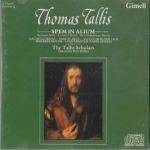
Tallis Scholars
“Spem in Alium”
Forty voices. Eight five-part choirs. I’m grinning like a fool at the giant image and the way in which the OAE2 is handling the complexity. I’ve owned it on vinyl and CD, though we’re using Qobuz here, and this is among the best streaming sessions I’ve had. Like everything else I’ve listened to during my time with the OAE2, I’m apt to forget I’m working. It just sounds great, regardless of the music.
Thanks to Grell Audio and Jessica at Jackrabbit Media for their support.
Manufacturers Site: https://grellaudio.com/
Price: $599
Technical Specifications
Frequency response:
12 – 34,000 Hz (- 3 dB), 6 – 46,000 Hz (- 10 dB)
Transducer principle:
dynamic
Ear coupling:
Circum-aural
Sound characteristic:
front-oriented loudness diffuse-field equalization
Adaptation to individual hearing curve:
Front-sided Sound Field Modulation (FSFM)
Nominal impedance:
38 Ω
Sound pressure level:
100 dB at 1 kHz, 1 VRMS
Maximum continuous input power:
500 mW (per IEC 60268-7)
Total harmonic distortion:
0.05% at 1 kHz, 100 dB
Weight without cable:
378 g
Headband clamping force:
2.5 N

Want to join discussion?
Feel free to contribute!