


I have been promised a pair of écoute headphones since I first saw them. When Andy Regan took over as President of écoute audio, I was once again put off to await the arrival of the écoute audio TH2 True Wireless Tube Headphone, an updated model with improved gimbals and resonance chamber. That day has finally come.
The écoute audio TH2 True Wireless Tube Headphone
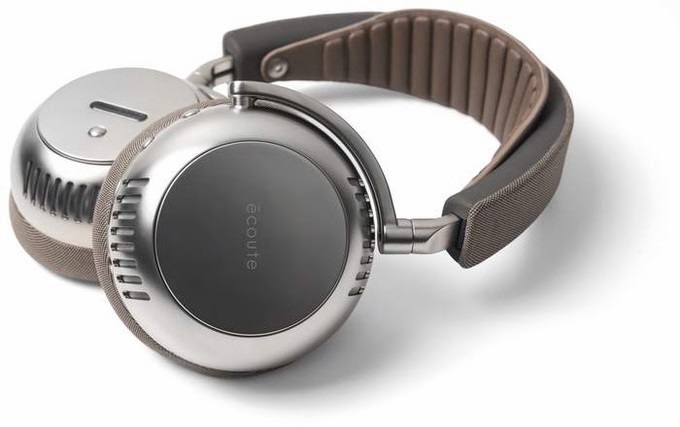
As previously mentioned, the TH2 is the second generation of écoute audio’s portable vacuum tube hi-fi system built with a complete hi-fi signal chain inside: a dual-core high-resolution DAC, a real vacuum tube preamp stage, and true dual-mono amplification providing fully independent channels from DAC to driver.
The TH2 features a redesigned resonance chamber tuned for deeper bass and extended treble, improved tube stage shielding for a lower noise floor as well as better RF and microphonic isolation, and a refined ANC system with a more natural transparency mode. The solid aluminum billet chassis carries a hybrid suspension headband with three points of articulation, to eliminate pressure points and providing stepless sizing adjustment for comfort across extended listening sessions.
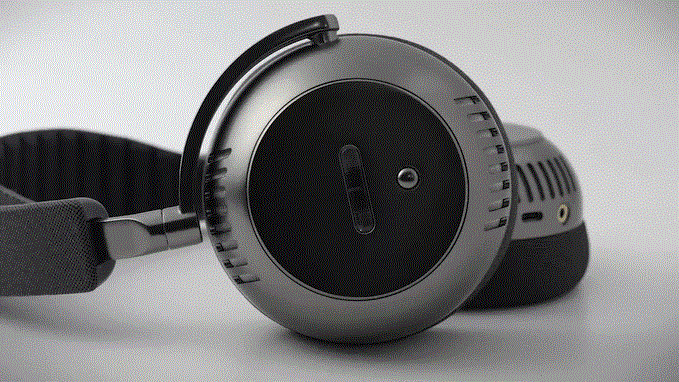
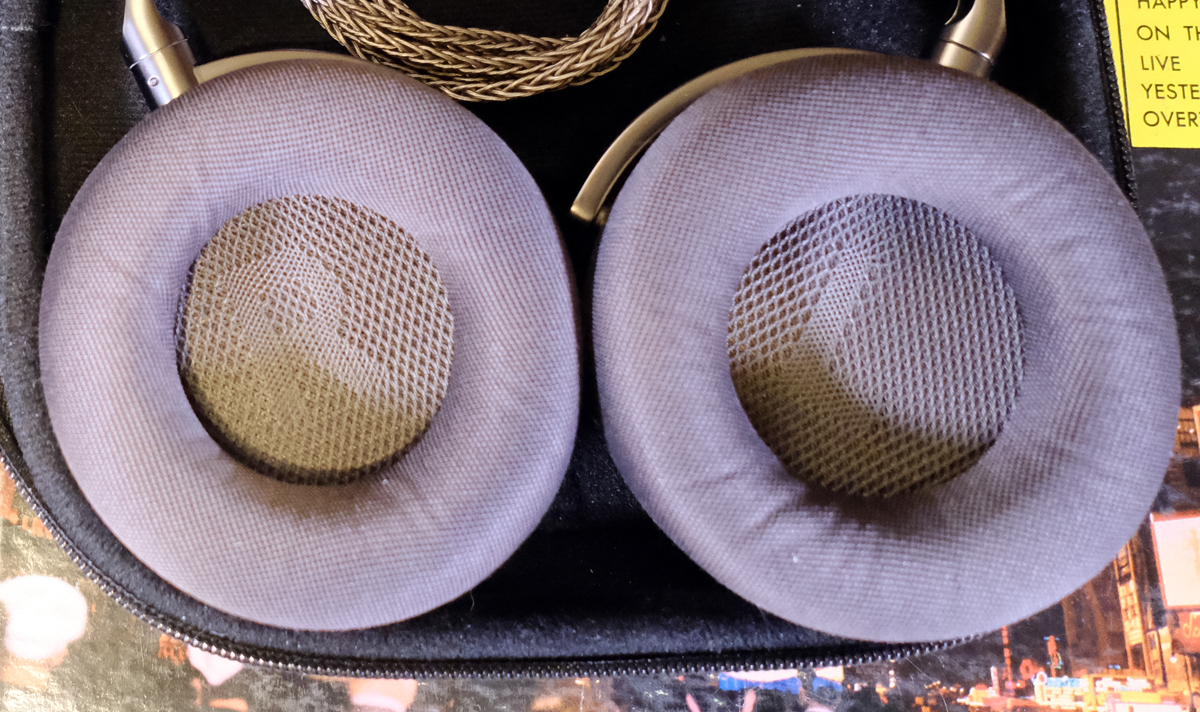
Construction of the TH2 is modular, and the ear pads and headband wraps are interchangeable, with a lambskin pad upgrade available. Three finishes are offered: Charcoal, Nickel, and Gunmetal.
The TH2 can operate wirelessly via Bluetooth 5.3 with LDAC (24-bit/96kHz, Android), AAC (Apple), or wired, implementing USB-C for lossless digital or 3.5mm for analog, that can run passive or active. Active Noise Cancellation and Transparency modes are available, as is a custom tunable 8-band parametric DSP (configurable à la the écoute Tuning App — curves written to headset firmware and persistent across all inputs).
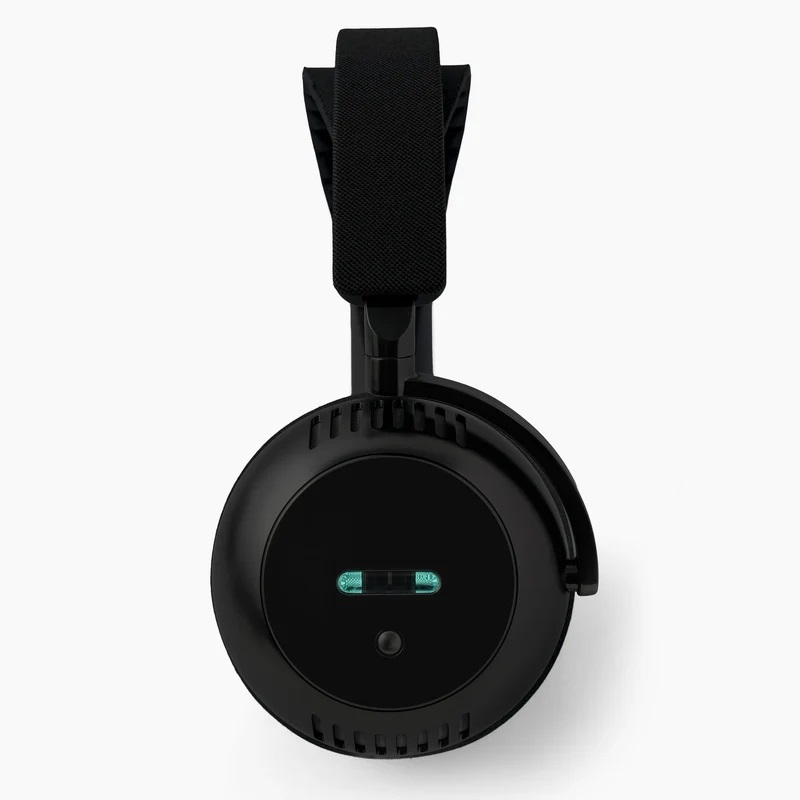
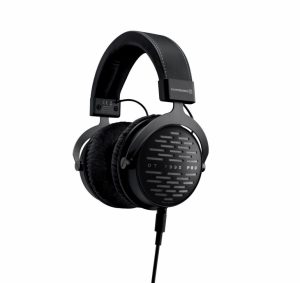
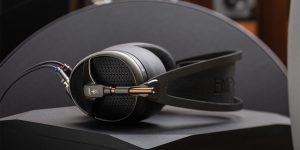
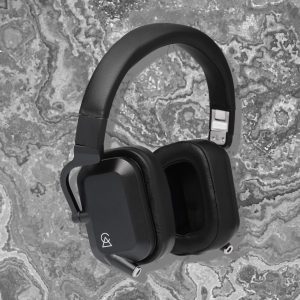
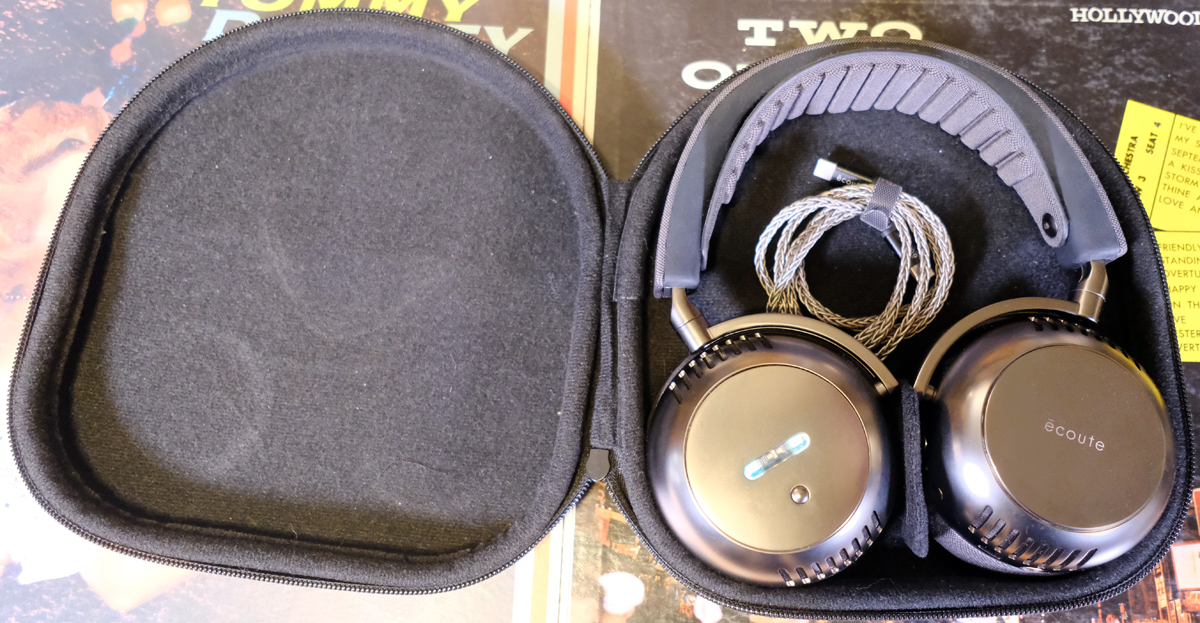
In appearance, the TH2 is extremely elegant with mostly metal construction and a beautiful metallic finish, semi-hemispherical ear cups (flattened on the outside with a window displaying the tubes; note some will be mystified that the tubes glow blue, but this is an aspect of the way they are built), hefty metal gimbals, and padded floating headband.
For accessories, you get a semi-hardshell zip-up carrying case and a 4’ braided USB-C Headphone Cable (that can also be used as a charging cable. A 3.5mm analog cable is not provided, but they are readily available.
Living with the écoute audio TH2 True Wireless Tube Headphone
Given there are three use cases for the écoute audio TH2 True Wireless Tube Headphone, four if you include noise cancellation, I would need to test them all. First on the agenda was to pair with my phone and install the écoute audio App. To let the TH2 warm up, I just listened to random music for a while, pulling up tracks on Qobuz I had been meaning to listen to. One thing I love about Qobuz is that I can sync it with my phone and control the phone from my computer, where I can better see the interface. I had to go into my phone settings to make sure the LDAC was engaged. Going into the écoute audio app, I discovered that the TH2 was defaulted to the Harmon curve, which was incredibly dark, so I changed the default to “FLAT,” choosing to investigate the EQ at a later point.

I started my serious listening with Chris Jobson’s “Wish You Well” (24-bit/96kHz – Qobuz) as I saw him perform his first solo concert a week ago at his father’s farewell show. The guitar, mandolin, cello, bass, drums, and vocals were performed by Chris, with Eddie Jobson providing his amazing piano and keyboards. The bass and bottom end were strong enough that I couldn’t imagine why the Harmon curve would demand more. The soundstage was huge for wireless headphones, and the sound overall was very musical.
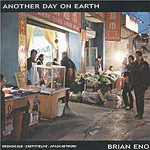
Next up was “Another Day on Earth” (16-bit/44.1kHz – Qobuz) by Brian Eno. Again, the bass was extremely strong and dove deep into the subsonic, supplying a palpable tactile impact. Cycling through the ANC settings, I noted that the mid bass was suppressed with ANC on while the deep sub-bass remained.
Since I was inclined to test the ANC at this point, I brought up an airline flight simulation on YouTube, turned the volume up, and put the TH2 back on. Passive noise suppression was minimal, in Transparency mode, the midrange was amplified, and in ANC, the noise suppression was fairly good, though not the best I have heard. I could clearly hear announcements even with music playing.
Putting on Max Richter’s “While The Flood Rages” (24-bit/96kHz – Qobuz), a classical composition with organ and electronica, the soundstage was quite large and the lone string instruments had excellent timbre, though the piano was a bit dark.

Hooking up the USB-C headphone cable, I brought up my reference playlist https://open.qobuz.com/playlist/10673532, selecting “Non Mi Lasciare” by Dario Baldan Bembo (16-bit/44.1kHz – Qobuz); while the low bass was still slightly emphasized, the overall tonal balance was more neutral, and the clarity and soundstage improved noticeably. Dario’s operatic vocal was rendered rich and lovingly.
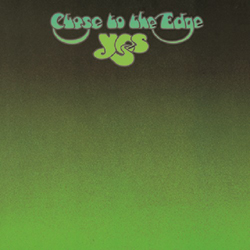
Anxious to take full advantage of the higher resolution of wired performance, I chose Yes’ “And You and I” (24-bit/192kHz – Qobuz) from their classic album “Close to the Edge”. The soundstage was vast, and the TH2 well supported the grandeur of the piece, digging down deep to reproduce Rick Wakeman’s lowest synth notes and adding authority to Chris Squire’s growly, blistering bass.

Vintage recordings were also well served by the robust bottom end, as evidenced by listening to the 1945 Single Version of Bing Crosby singing “Too-Ra-Loo-Ra-Loo-Ral(That’s An Irish Lullaby)” (16-bit/44.1kHz – Qobuz), which added weight to Bing’s already resonant baritone.

Firing up my reference system consisting of the dCS Bartók APEX DAC with Headphone Amplifier, Black Dragon Power Cables, and Core Power Technologies A/V Equi=Core 1000, I scared up a 3.5mm TRS cable to test the TH2 in passive mode. Queuing up “In The Air Tonight” (“Face Value” – 24-bit/192kHz0) by Phil Collins, the tonal balance was similar to the active USB-C performance, just a touch heavier on the mid-bass.

Listening to “Singing Winds, Crying Beasts” (“Abraxas” – DSD), it was clear that though passive mode is supported, it was not the optimal use case; the Bartók APEX struggled with some of the bass tracks.
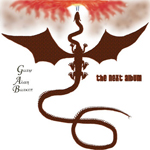
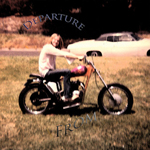
As a last test, I reconnected to my phone via USB-C to experiment with the EQ. Weirdly, most of the preset curves boost the bass, which seems very odd with such a bass-heavy headphone. Launching Bandcamp and pulling up my “The Next Album” (Gary Alan Barker – 24-bit/96kHz-Bandcamp – https://garyalanbarker.bandcamp.com/album/the-next-album), I picked “Orange (vocal)” which I picked for the layered bass sounds and vocal, and scrolled through the different settings, settling on either “Balanced Neutral” or “Flat” though “Acoustic” most replicated the room in which the recording was made, but as only the vocal was acoustically recorded (the rest was patched directly into the computer) that is deceptive and “Balanced Neutral” most reflects what was in the original mix. This was reinforced listening to “Ernest Endeavor”, which was simple acoustic 12-string guitar and vocal. For live piano, I had to revert to my first album “Departure From” (Gary Alan Barker – 24-bit/96kHz-Bandcamp – https://garyalanbarker.bandcamp.com/album/departure-from) and select “Who Holds the Sun”, for which “Balanced Neutral” was king.
Conclusions on the écoute audio TH2 True Wireless Tube Headphone
It is of no question that the true magic of the écoute audio TH2 True Wireless Tube Headphone is the enclosed tube amp. I suppose I should have tried the passive mode with other sources, as it worked well with some music, though not all; at its best, passive mode did not compete with active. And though it is possible to run active mode via analog input, it is hard to see how that could perform any better than via wired digital input. The internal DSP also appears to be fundamental to the proper operation of the TH2. As the unit I received had seen quite a bit of previous use, I do not know what the default EQ setting is, but I recommend starting with “Flat” and working from there.
True bass heads are going to love the TH2; it not only thumps, it resonates, digging deep into the subsonic. Again, the DSP allows for fine-tuning for those who seek a gentler tonal balance. Clarity, detail, dynamics, and soundstage are all exceptional, and the tube amp makes the mid-range and high frequencies eminently forgiving.
A fantastic choice for all genres of music, including those I generally don’t listen to like Hip-Hop, Disco, and EDM, the TH2 is able to reproduce the environment of a dance club or concert hall; the TH2 is a TWS headphone that has no equal, regardless of price.
The only caveat is that if ANC is your primary use case, there are others, though not with anywhere near the sound quality, that provide better isolation and have superior noise cancelling. Still, I would be inclined to try out the écoute audio TH2 True Wireless Tube Headphone and see if it is sufficient to need in this consideration before resorting to an inferior product for this one use case.
One final note: the controls on the TH2 were the most functional of any wireless headphone or IEM I have tested.
Price:$999 MSRP, $899 Pre-sale Price
Manufacturer’s Website: https://ecouteaudio.com/products/th2-closed-back-audiophile-headphones-with-vacuum-tube-preamp
FEATURES
- Noise Cancellation: Active Hybrid Noise Cancellation (ANC) (FF + FB)
- Transparency mode
- Voice Assistant Compatibility: Siri and Google Assistant
- On-Ear Controls: volume, track, telephonic control
- Microphone: Built-in
SPEC
- Preamp: Nutube 6P1 Dual Triode Vacuum Tube
- Amplifier: High-Bias Class A/B Dual-Mono Amplification
- DAC: High-res 32-bit / 384 kHz capable Dual-core, Built-in
- Transducer: 40mm Titanium-Coated Mylar
- Frequency Response: 20 Hz – 20 kHz
- Weight: 424 grams
WIRED CONNECTIVITY
- Analog: 3.5 mm
- Digital: USBC
WIRELESS CONNECTIVITY
- Bluetooth Version: 5.3
- Supported Profiles: A2DP, AVRCP, HSP, HFP
- Codecs Supported Natively: SBC, AAC, LDAC
- Wireless Range: Up to 10 meters (33 feet)
BATTERY
- Playtime: 20 hours at maximum volume
- Charging Time: 3.5 hours
- Standby Time: 30 hours
- Charging Port: USB-C
Custom tunable with the écoute tuning app

Want to join discussion?
Feel free to contribute!