






Introductions
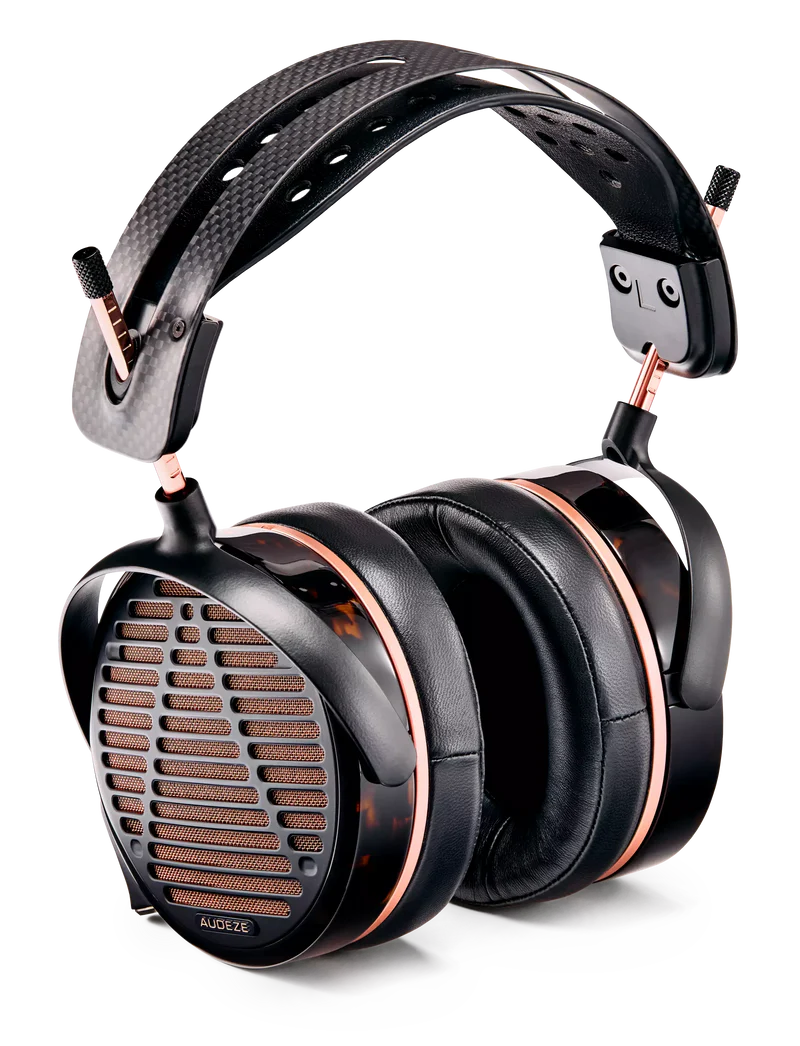
Audeze’s flagship open-back planar magnetic headphone, the LCD-5s, appears, at least in name, to be a revision of their LCD-5, but that is far too simplistic a view. In fact, this luxury pair’s design incorporates their latest driver, SLAM technology, and newly sculpted earpads. And, while the headphone does retain the overall look of its predecessor, the materials used and style have been updated too. Now sat at the top of their Audiophile lineup, Audeze asserts that the LCD-5s will be at home both in the studio and in the hands of discerning listeners.
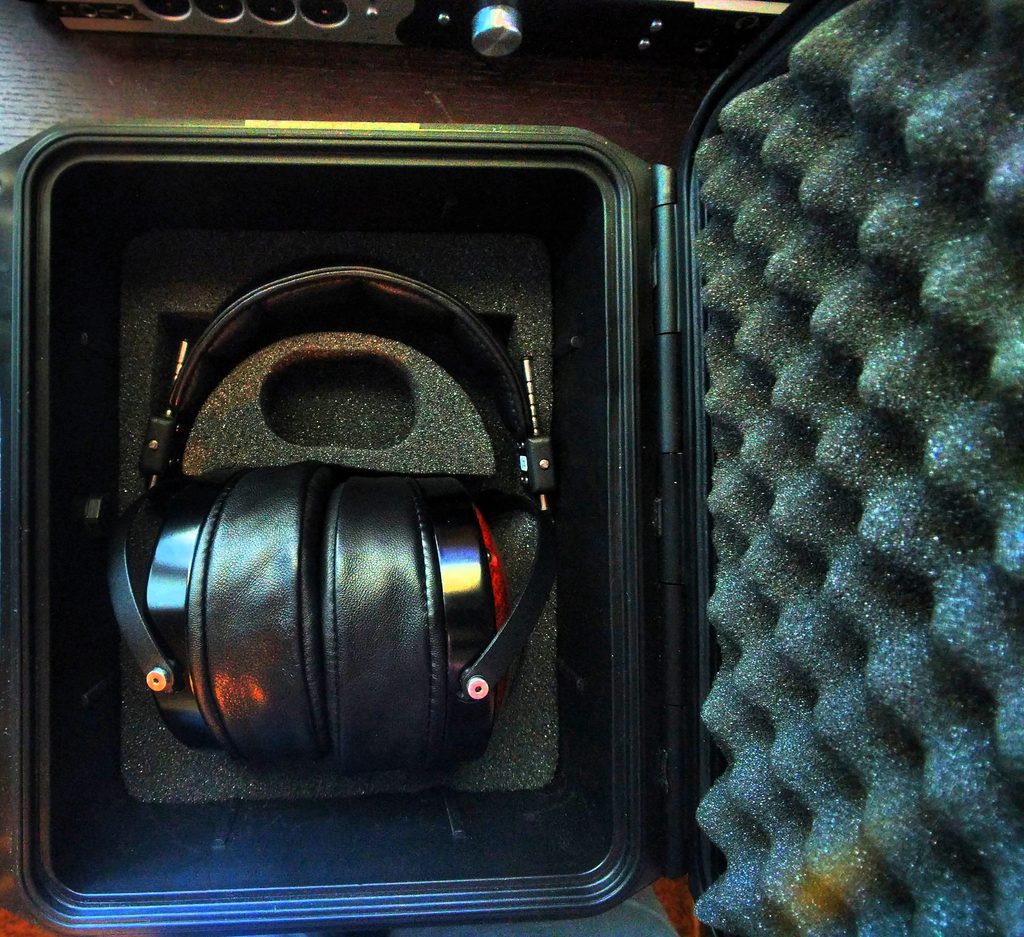
It has been over a decade since I owned one of the LCD series. Somewhere in time, maybe 2015, I sat with the LCD-XC (with wood cups) for a good while. My current closed-back planar workhorse, the Dan Clark Audio NOIRE X, has done a fine job over the past year or so. As for the LCD-XC, I dug their articulate and weighty sound quite a lot, though their real-world weight (near and around 700g) proved to be too much for extended sessions. I excavated this (admittedly bad) photo below from what little is left of my personal archives.
Returning to the present, I have sat strapped into the LCD-5s for the past few weeks, and have many words for you on this brilliant pair.
Design
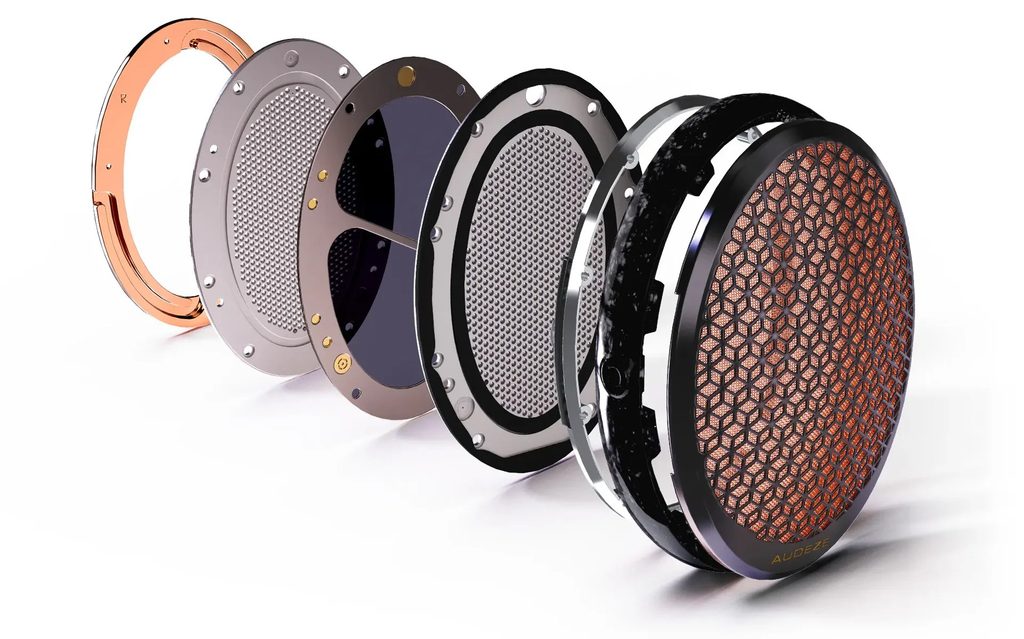
Audeze calls the latest iteration of their driver, Parallel Uniforce. The nano-scale driver features their thinnest materials to date, and is attached to a revised chassis. The driver is based on their existing 90mm unit, mated to their Fluxor Neodymium N50 magnet array and Fazor phase management tech. Add to this what Audeze calls a Symmetrical Linear Acoustic Modulator, or SLAM, first implemented in their electrostatic headphone, the CRBN2. What it is is that copper colored ring sandwiched between the drivers and the earpads. The ring is vented, which simultaneously relieves pressure (created by the pair’s excellent seal) between the driver and our ears, both improving the overall performance of the driver and sculpting the headphone’s remarkable low-frequency presence and reach.
For more technical talk from Audeze, look here.
Fit and Finish
The LCD-5s feels quite nice in hand. The look, materials, and build meet expectations for a luxury headphone. It’s true, it is better in person. The copper (the SLAM ring, exterior grill of the cups, and yoke posts) on black theme is further enriched by the new polished polymer acetate cups. The build is refined, and functions just how I’d want it to, with enough articulation to fit varied listeners, without being loose-limbed. The carbon fiber outer band and perforated leather headband distribute the headphones’ 478g weight quite well. Combined with the firm but gentle clamping force and newly designed leather earpads, the headphones’ fit never draws attention away from the music, even over day-long sessions. Of course, the pair relaxed into this state over time, just like its voice did.
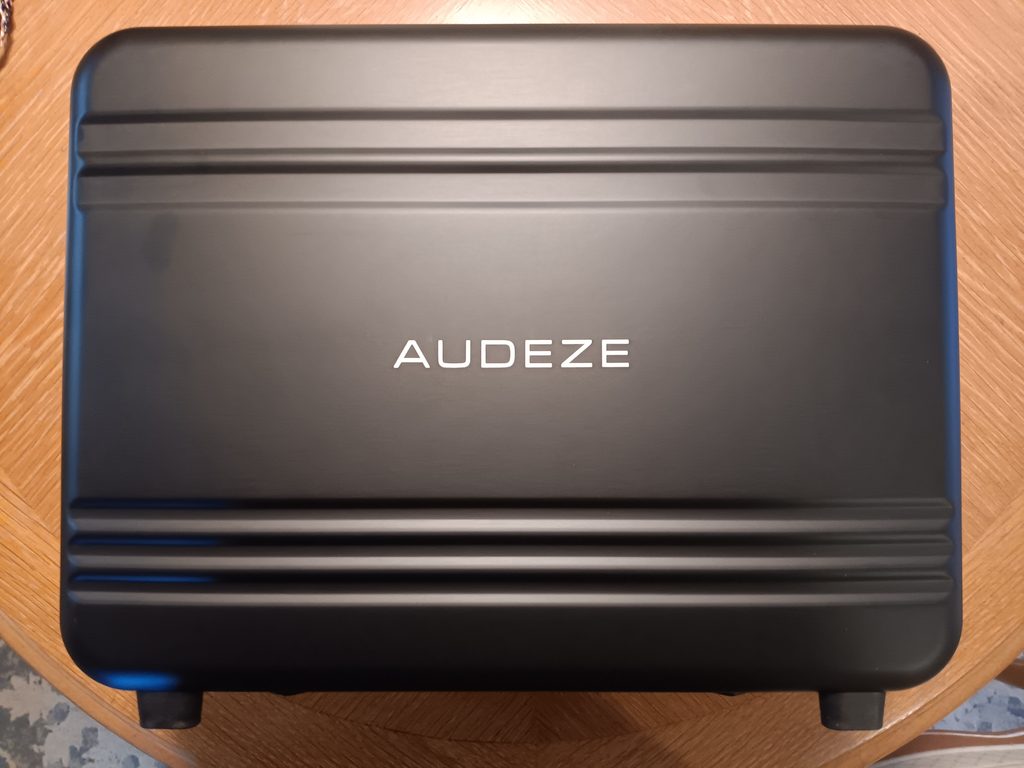
The aluminum case is high quality and does its job as expected. The pair also comes with the California company’s high-end balanced cable with standard 4-pin XLR termination, and in complementary dress. Add to this, a color-matched 4-pin XLR > 6.3mm adaptor. Here, Audeze also includes a certificate of authenticity and white gloves for careful handling. I admit, beyond cables, I am less focused on the accessories included with the high-end offerings like the LCD-5s. Expectations will vary.
Listening
I ran the LCD-5s with my primary desktop system, centered around the Enleum AMP-23R, Schiit Yggdrasil (v1+A2+gen5USB), and Eversolo DMP-A6 as dedicated streamer. AudioQuest power products (check out the recent report on their PowerQuest 707 here) and cable tie it all to the Earth. Qobuz is my streaming service of choice.
If only to place this report in context, I want to add here that all of my most galvanizing experiences between two loudspeakers or headphones have been with designs of a high sensitivity. If forced to nail it down, 100db is the preferred target, though this is not a hard rule. Ultimately, it’s down to how well the components sing together. Point is, I am reminded here that one measure cannot illustrate the real-world listening experience. There are simply too many variables. According to Audeze, the LCD-5s requires a minimum of 500mw of power to sit up straight. This is perhaps not such a big ask today, but it does limit the range of useful amplifiers somewhat. I’ll add that I trust most listeners considering the headphone have a system that can reveal its potential.
The LCD-5s can handle up to 5 watts, which is near to what the AMP-23R can do with it. That’s a lot of wattage. No one needs this much power with this headphone; I would not run it dimed, I think. Not for long, anyway. That said, and what I like about this, and to counter my own quirks regarding headphones (and loudspeakers) with low sensitivity ratings, is that when paired with an amplifier like the AMP-23R, we have headroom. Loads. Like some similarly designed planar headphones (most recently, the far less costly Shanling HW600, though to a lesser extent), in this context the LCD-5s delivers on any power fantasies listeners may be looking to satisfy. The power handling, combined with its lower center of gravity, superb control, and agility, makes this one rocking pair. When the recording provides, the image is rooted in bedrock. This applies to all styles, of course, not only heavier music. It’s not only about bass impact, this tuning gives instruments and voices more weight, mass, and color.
I would not say it’s a darker-sounding headphone. It’s true, it isn’t bright, and apparently, in direct comparison to its predecessor, it is the warmer voice. That said, I found the high-frequency texture to be among the finest I’ve heard. Any sibilance present in the material remains, but is not highlighted. To my ears, transients have proper weight and contour. Even bells and smaller cymbals exist as hammered discs of alloy, and not just as shiny touch points. Instead, they sing like objects with mass and metallic sheen. It’s a thing for me, yes. Yet, it remains. The midrange is grounded, but I didn’t find any mud or blurring. This is an articulate and colorful sound, bound to the Earth by its powerful low-frequency performance.
As for scale, the LCD-5s is not about projecting an oversized image. It is a large stage, though it doesn’t escape the outer edge of the ear cups. That said, both the height and width are great, and, to my ears, the depth is remarkable. Pulling back, I’d say the image provides dimension, coherence, and ample room for the instruments and voices. With more challenging mixes, the pair did not disappoint. Dynamics are fluid; it does not feel constrained or compressed. When the recording provides, the stage feels mostly untethered. I’d say the LCD-5s builds a solid scaffolding within which the songs are spun up. There’s that lower center of gravity, articulation, and control again. Yes, please.
Field Notes

With “A Tone Parallel to Harlem”, from the Ellington Uptown record, the brass and woodwinds are simultaneously well-balanced and coherent as one group, and yet each voice is present with its unique voice. This is a mono recording. Also, there’s plenty of blat and resonance.
Perhaps one of the best tests during this session was the mono mix of “Will o’ the Wisp” from Sketches of Spain. Muted trumpet can be problematic. Mono mixes can congeal with lesser systems. Miles Davis’ horn had all the bite and color I’d want, though without ever becoming too pointed or harsh. The bass was present and articulate, the percussion woody and solid.


“Rite of accession” from Elephant9’s record, Arrival of the New Elders, had more momentum, due in part to the acoustic guitars being gently lifted above the mix, every stroke there and within the drums subtly articulated among the swirl of keyboards and electric guitars.
“All Your Wolves” from Stian Westerhus’ record, Redundance, captured my attention from the first beat. The subtle pulse and rhythmic flutter quietly accompanying Westerhus’ voice through the opening of the track, ending with the harp just before the pulse expands, were illuminated like a secret previously buried. Good fun.


Harry Connick Jr’s version of “Love is Here to Stay” from the When Harry Met Sally soundtrack is another good example. The spatial cues and tonal fidelity here are stellar, and the LCD-5s represented the live performance beautifully. Jeff “Tain” Watts’ kit was appropriately set back on the recorded stage, illustrating again those tasty transients, and the headphones’ superb handling of high frequencies.
“Mesa” from Hans Zimmer’s Blade Runner 2049 OST was as ominous and menacing as ever. The synths had bigger teeth, and the low-frequency energy was mighty. And, just like the other material above, there is no blurring here. The midrange is consistently open and faithfully rendered.


“Oh Well“, from Fiona Apple’s Extraordinary Machine was beautifully illuminated, the complex mix laid bare, though not dissected or fragmented. Apple’s voice was lifted above it all, and gently commanding. I swear I could hear Abe Laboriel Jr.’s 24″ kick drum’s front head fluttering, as if loosely tuned. No idea if any of that’s true (don’t care), but this system, with the LCD-5s inline was sorting, was decoding, so much rhythmic information that I was all in from the first beat.
Alewya’s “Red Clay Luv” from her album, Zero, sounds huge. Bathing in those synths, silky vocal layer, and bouncing along with that thuddy bass drum on the river of low-frequency information was deeply groovy. Yes, please and thank you.

Summing
The above list goes on and on. You don’t need all that noise; you’ve enough of that already. Audeze’s latest headphone does not disappoint. The luxury planar magnetic headphone is a handsome beast. A refined one too. A beast that delivers all-day comfort. A voice built from the bottom up. When the recording provides, the stage is bedrock, revealing its delicious combination of speed and control. This is an irresistible combination of agility, control, resolution, and color. If you are considering a luxury planar magnetic headphone, please do wrap your ears in the LCD-5s for a time.
Thanks for listening.
| Specifications | |
| Style | Over-ear (circumaural), open-back |
| Transducer type | Planar Magnetic |
| Magnetic structure | Fluxor™ magnet array |
| Phase management | Fazor™ |
| Acoustic management | SLAM™ |
| Magnet type | Neodymium N50 |
| Diaphragm type | Nano-Scale Parallel Uniforce™ |
| Transducer size | 90 mm |
| Maximum SPL | >130dB |
| Frequency response | 5Hz – 50kHz |
| ImpedanceTHD | 35 ohms<0.1% @ 100dB SPL |
| Sensitivity | 90dB/1mW (@Drum Reference Point) |
| Minimum power requirement | >100mW |
| Recommended power level | >500mW |
| Maximum power handling | 5W RMS |
| Weight | 475g |
| Shipping Weight | 9 lbs. |
| Package dimensions | 16 L x 14 H x 8 W in. |
Manufacturer Site: https://www.audeze.com/
Price: $4500

Want to join discussion?
Feel free to contribute!