





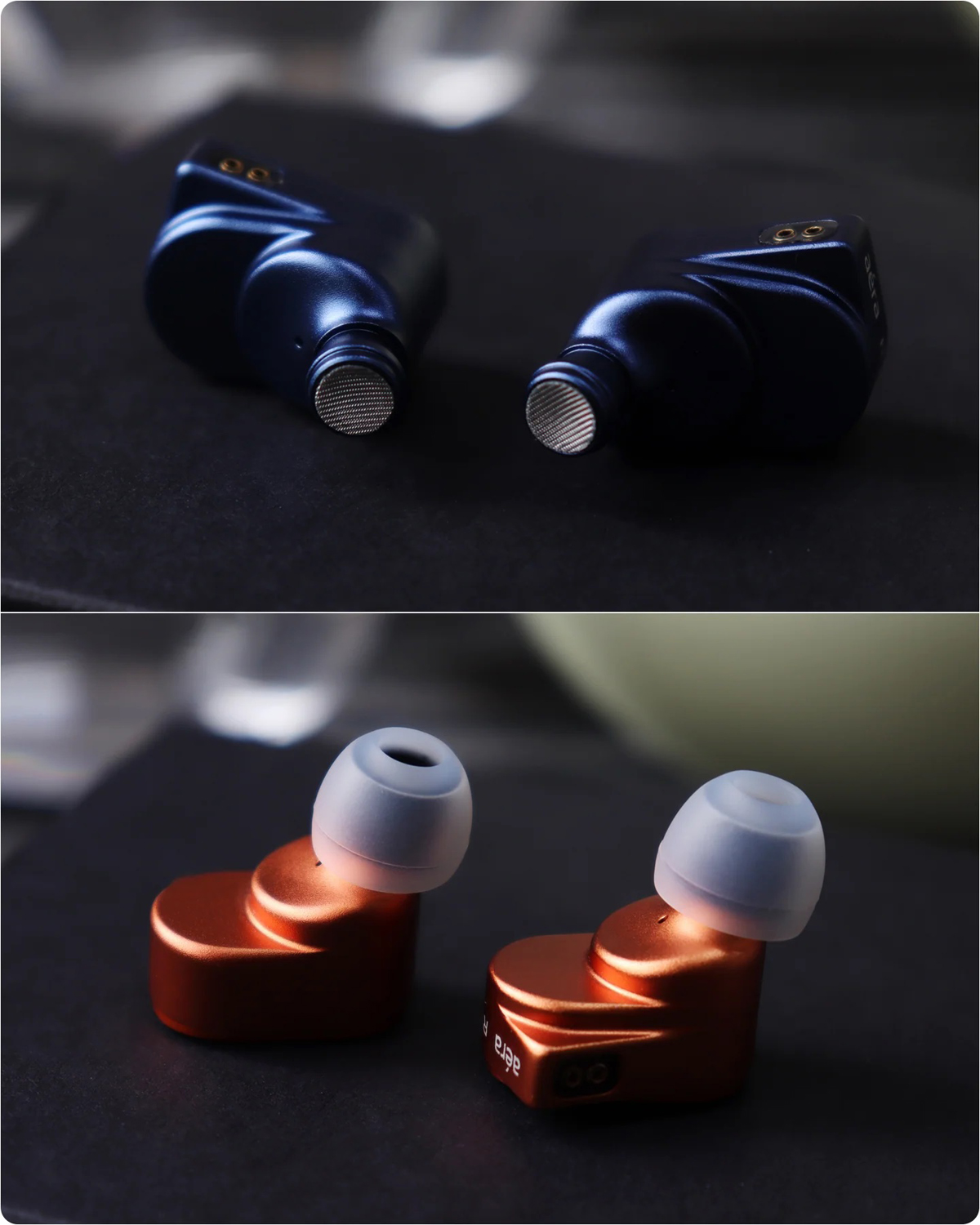
The Saccater aéra Full-Frequency Planar Magnetic Driver In-Ear Monitor admittedly is unique in how it came to me for review. Unlike any other review, it was not a product I knew about before receiving the review request; it was not a product I discovered at a show; I was simply approached by the manufacturer and asked if I would be willing to review it. Always willing to explore new technologies, I said, “Sure, send it.” I admit I was skeptical because this is a product currently only available through Kickstarter. Past experience has shown me that Kickstarter campaigns are filled with wildly spurious unsubstantiated claims, and mostly hype. And I will say that Saccater did not shy away from this model, spending a great deal of real estate talking about the dangers of IEM use. Ironically, as I went through Saccater’s documentation, I discovered that they weren’t offering any groundbreaking technology like ADEL (a system specifically designed to limit the sound pressure from IEMs), or, in fact, anything within the IEM itself to protect your hearing other than recommending a maximum of 30 minutes of listening time followed by 10 minutes rest and listening at low volumes in quiet environments. That being said, a planar IEM for $130 is not a bad deal, and during preliminary listening, they did not sound awful (quite the accomplishment in an inexpensive IEM).
The Saccater aéra Full-Frequency Planar Magnetic Driver In-Ear Monitor
“The aéra Philosophy—Engineered for “Hearing-Friendly” Sound”
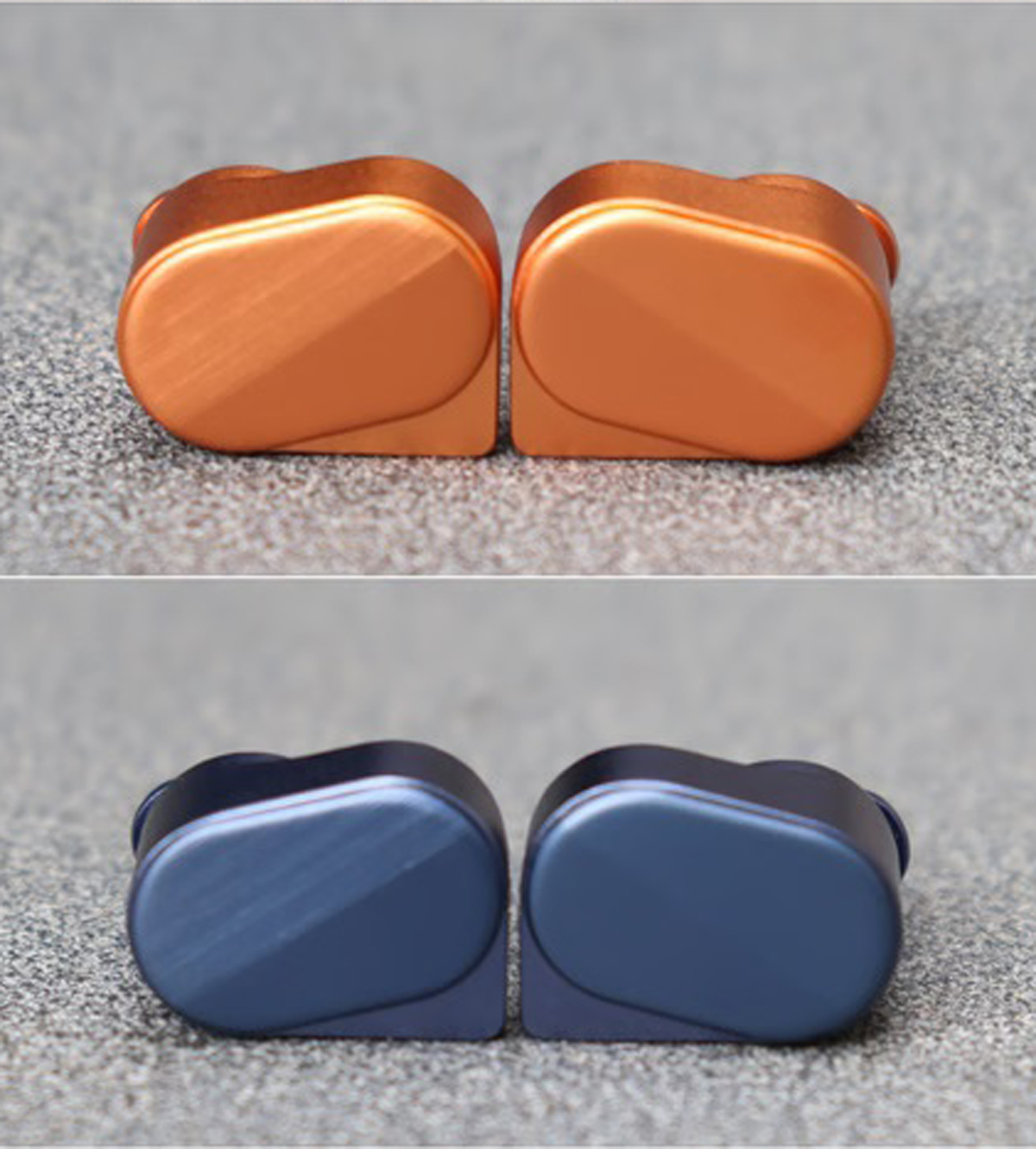
“1. The Ergonomics of Hearing (Zero-Pressure Fit)”
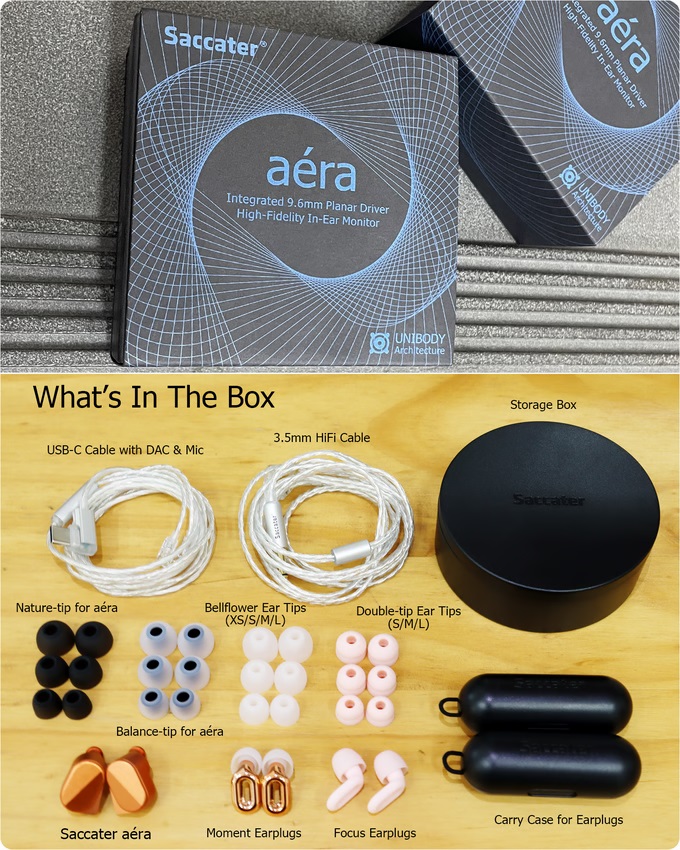
It should be noted that it appears that Saccater’s primary business is the production of earplugs; in fact, the aéra came with two sets of earplugs, one for general ear protection with a rating of -30dB noise reduction (Saccater Focus Noise-reducing Earplugs) and one for music listening (i.e., rock concerts) with a Rating of -13dB noise reduction (Saccater Moment Earplugs).
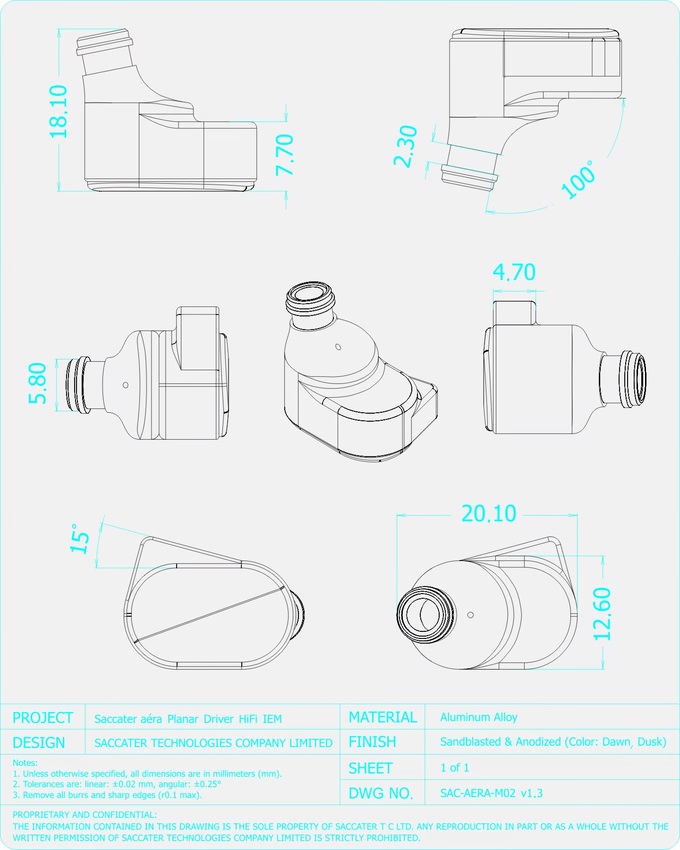
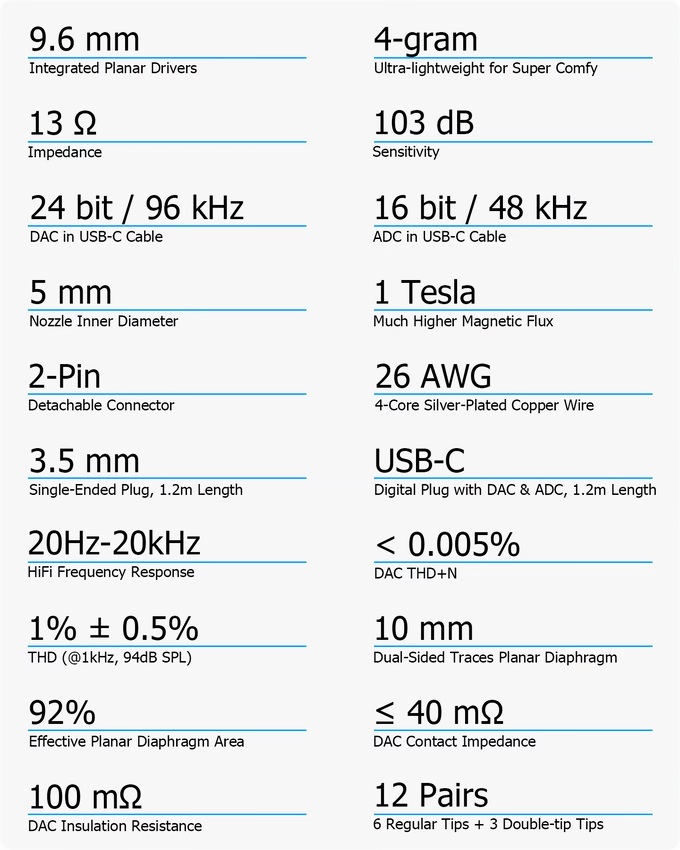
The aéra was designed based on research done for earplug comfort, which indicates that the IEM should not extend beyond your ear, and there should be minimal contact points. Though not the smallest IEMs I have reviewed, they are quite compact and, at 4 grams, quite light. They also contend that reinforced cables with preformed ear hooks are less comfortable, though I have found the opposite to be true and prefer them. Ironically, they sent me the wrong 4.4mm cable, which employed preformed ear hooks going the wrong way, so I was unable to use it (this meant twice the burn-in time to accommodate the single-ended cable).
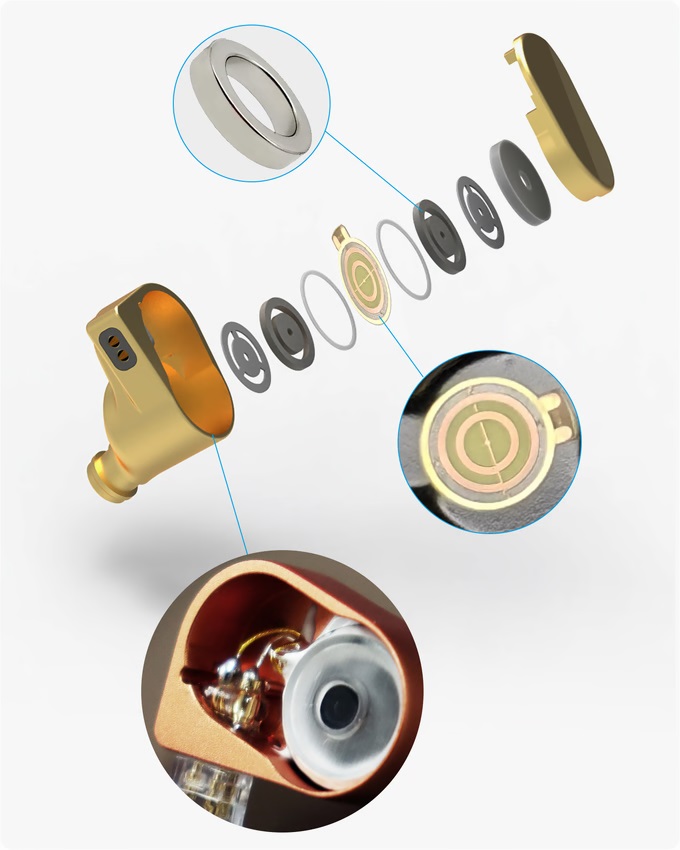
“2. The Architecture of Sound: Revolutionary 9.6mm Planar Magnetic Driver”
In collaboration with the acoustic pioneers at LETSHUOER, Saccater developed what they claim is the world’s first Integrated 9.6mm Full-Frequency Response Planar Magnetic Driver. It is indeed, as far as I am able to determine, the only 9.6mm Planar Magnetic Driver so I can buy this assertion, but as this is neither the largest nor smallest full-range planar magnetic driver (in fact, the Akoustyx 6.2mm boasts a much wider bandwidth of 10Hz to 40kHz) I’m not sure the word “revolutionary” applies, unless they are referring to the fact that it has no dedicated housing, employing the IEM shell as the driver housing to save on weight. Most IEM drivers are self-contained units, whether they are dynamic, balanced armature, or planar. This is due to the fact that most IEM manufacturers do not actually build their own drivers, leaving that to manufacturers who have proven to have expertise in this field. As LETSHUOER builds both driver and shell as a unit, a separate dedicated housing is not required.
One apparent LETSHUOER exclusive that Saccater makes much of is the ring planar magnetic driver. This consists of two sets of two circular magnets (one large and one small that fit inside each other, the four totaling 1 Tesla of magnetic flux) and a circular diaphragm with two concentric circle voice coils (on both sides of the diaphragm). This LETSHUOER states increases the effective diaphragm area from 55% to 92%, which in practical terms means a larger driver in a smaller package. One of the key advantages of a planar driver is that the energy is applied evenly across the entire diaphragm, reducing diaphragm distortion and the subsequent waveform and phase distortion caused by that deformation. It seems to me that due to the different geometries of the two voice coils, this advantage would be reduced, but it would probably take an electromechanical engineer to say for sure that this is the case.
“3. A Conscious Listening Ecosystem”
This is the extent of the actual hearing protection that the majority of the sales pitch is actually dealt with. To quote Saccater,
“Engineering a safer IEM is only half the battle; the other half is changing listening habits. While the World Health Organization (WHO) recommends the “60/60 rule” (listening at 60% volume for no more than 60 minutes), Saccater goes a step further. We actively advocate the “30-10 Principle”: For every 30 minutes of listening, give your ears a 10-minute rest. To ensure this philosophy reaches every user, every aéra includes a comprehensive Hearing Health Manual detailing safe usage practices.”
According to Saccater the aéra features a perfectly flat 13-ohm impedance curve from 20Hz to 20kHz limiting the variance in performance from source to source (IE: the sources 13 Ω performance will apply to the entire sonic spectrum).
The aéra is provided with a High-Purity Silver-Plated Oxygen-Free Copper (OFC) cable, utilizing the industry-standard 0.78mm 2-Pin connector and 3.5mm TRS single-ended connector. A second USB-C Silver-Plated Copper (SPC)cable is provided with a built-in high-performance DAC chip supporting up to 24-bit/96kHz plug-and-play, which also includes an inline microphone and media controls (ADC: 16-bit/48kHz. Both of these cables are thin braided wire sans preformed ear hook as mentioned above.
A Saccater Aerion 4.4mm Balanced Cable is available as an option employing an Audiophile-Grade Conductor (A 260-strand OCC Copper and Silver hybrid braided), and Advanced Shielding ( Silver-plated OCC ) Featuring a crystal-clear 4.4mm balanced plug and a highly durable, tangle-free transparent TPU jacket.
Living with the Saccater aéra Full-Frequency Planar Magnetic Driver In-Ear Monitor
Of course, all hype aside, the proof is in the puddin’, IE: all that matters is the sound. As the dCS Bartók APEX DAC with Headphone Amplifier is a bit overkill for a $130 IEM, I hooked up my HIFIMAN GOLDENWAVE SERENADE DAC/Headphone Amplifier as DAC to my favorite amplifier, the Schiit VALI 2 ++ Tube Hybrid Amplifier, which at $150 is in keeping with the Saccater aéra Full-Frequency Planar Magnetic Driver In Ear Monitor.

As my internet was down, I was unable to stream music, so I moved straight into my test tracks beginning with “A Hazy Shade of Winter” (“Bookends” – 24-bit/192kHz) by Simon and Garfunkel. The tonal balance leaned to the upper midrange, with an intimate soundstage, and a snap to the percussion emphasizing the snare drum and the tambourine cymbals.

The piano for Liz Story’s “Wedding Rain” (“Solid Colors” – 16-bit/44.1kHz) was sprightly and delicate with a light bottom end, but otherwise excellent timbre, and a good-sized soundstage.

Switching to my default tonal balance and sub-bass track “Can-utility And The Coastliners” (DSD) from Genesis’ “Foxtrot”, the bass, though depressed, was more well-defined than expected, though the sub-bass was pretty much rolled off. Once again, the tonal balance was fairly neutral with only a slight uptick at the high end.
The opening low-frequency roar of the celli was absent from Robert Shaw and the Atlanta Symphony Orchestra’s performance of Stravinsky’s “The Firebird Suite” (“Stravinsky: The Firebird; Borodin: Music from Prince Igor” – 16-bit/44.1kHz), but the timbre of the instruments was very natural, and a feeling of space was imparted. The dynamic range for the crescendos was good but not exceptional, as can be expected from a planar driver, and in a way fulfills Saccater’s mission of hearing protection by not reproducing the extreme sound pressure of the tympani.

To remove the musical bias imparted by the amazing tube amp, I switched to the GOLDENWAVE SERENADE’S headphone amplifier. Sensing that the aéra’s real strength lay in folk, singer-songwriter, and light rock, I put on “Snowblind Friend” (“Steppenwolf 7” – Steppenwolf – 24-bit/192kHz) and was not disappointed; the acoustic guitars and hi-hat were crisp, the bass guitar mellow. The vocal fully captured John Kay’s gruff baritone.
Taking Saccater’s recommended break from listening, though I fear the above took longer than 30 minutes, I traded cables to the cable DAC. This, of course, allowed me to bring up Qobuz on my phone.

Selecting “Eight Ring Revival” (24-bit/48kHz – Qobuz) by Telemakus, I found immediately this to not be music that was flattered by the aéra. Bass-centric jazz with a lot of upper midrange keyboard effects, the music was lost in the noise.

Next up was something that I expected to not love the aéra; hard-core post-punk in the form of a live recording of Sonic Youth (“Live in Berlin, Germany – Columbiahalle – October 21 2009” – 24-bit/48kHz – Qobuz), color me surprised, while the bass was pushed into the background, the limited dynamic range of compressed guitars worked well, recreating a very live concert hall.

Also striking at the heart of the aéra sound was “French Trios” (24-bit/96kHz – Qobuz) featuring Aneleen Lenaerts, Timothy Ridout, and Adam Walker, a trio of harp, violin, and flute.
Conclusions on the Saccater aéra Full-Frequency Planar Magnetic Driver In-Ear Monitor
I think fans of classical music, singer-songwriter, folk, or solo instrument music will enjoy the Saccater aéra Full-Frequency Planar Magnetic Driver In-Ear Monitor. Bass heads and lovers of bass-heavy music will probably want to look elsewhere. The aéra worked well with rock music, especially live, as long as bass wasn’t the fundamental component of the song. The sonic signature is very reminiscent of the popular HD800, though without the accompanying out-of-your-head soundstage.
True to their claims, the aéra is very easy to drive, so I can’t really think of a case where the balanced cable would become a necessity or even a desirability, as with higher gain the base noise floor is often also higher.
As to comfort, the aéra is indeed extremely light, and fits well within your ear, though for me, the large nozzle size was the point of fatigue as my ear canals are oval-shaped with a fairly small opening in one direction. The lack of ear hooks was not an issue, and as long as you kept to their recommended listening sessions, I doubt that it would be an issue either way.
All in all, I believe the aéra to be a good value, and considering the competition I have heard in this price bracket, an excellent contender.
Price: HK$999 approximately $128 USD
Manufacturer’s Website: https://www.kickstarter.com/projects/saccater/saccater-aera-integrated-planar-driver-hi-fi-iem
Specifications:

Want to join discussion?
Feel free to contribute!