





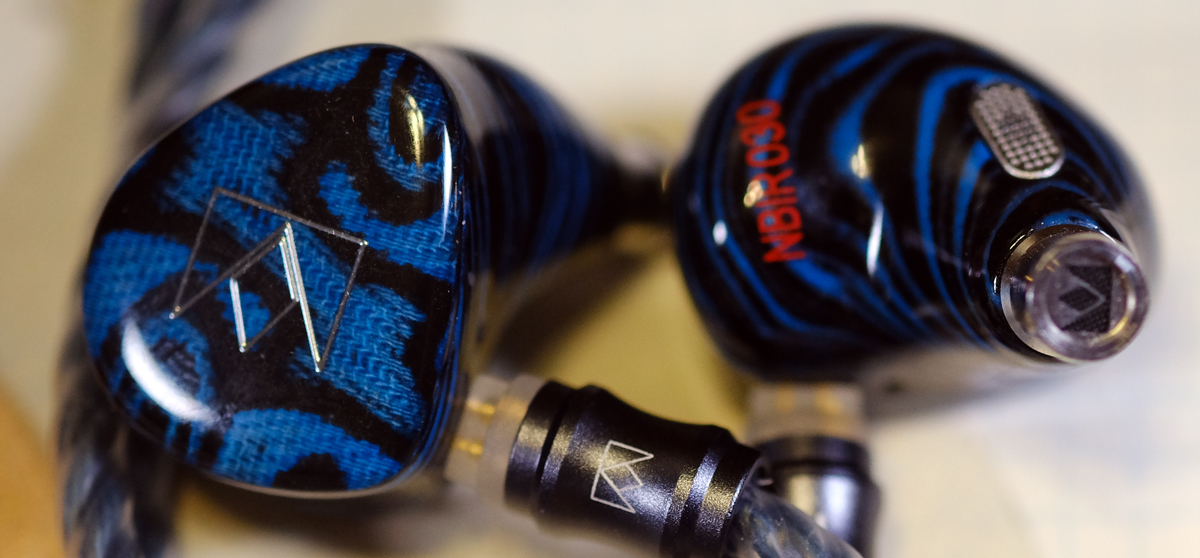
It is no secret that Noble Audio is one of my favorite headphone manufacturers, and my favorite IEM manufacturer, period. My two go-to IEMs are my Noble Audio Katana CIEMs, which are my primary travel IEMs, as well as remaining one of the most tonally accurate IEMs I have ever heard, and my Noble Audio Viking Ragnar IEMs, which are second only to my Dan Clark Audio CORINA Electrostatic Headphones in overall sound quality. That being said, it has been four years since I last reviewed a pair of Noble Audio wired IEMs, mostly because demand has outstripped supply, making them rather hard to come by. At CanJam SoCal 2026, I was able to kidnap a pair of Noble Audio IRIS In-Ear Monitors as the show was wrapping up. This is rather exciting for me because, not only am I excited to review a new model, these are the first entry-level Nobles I have reviewed that are not TWS.
The Noble Audio IRIS In-Ear Monitor
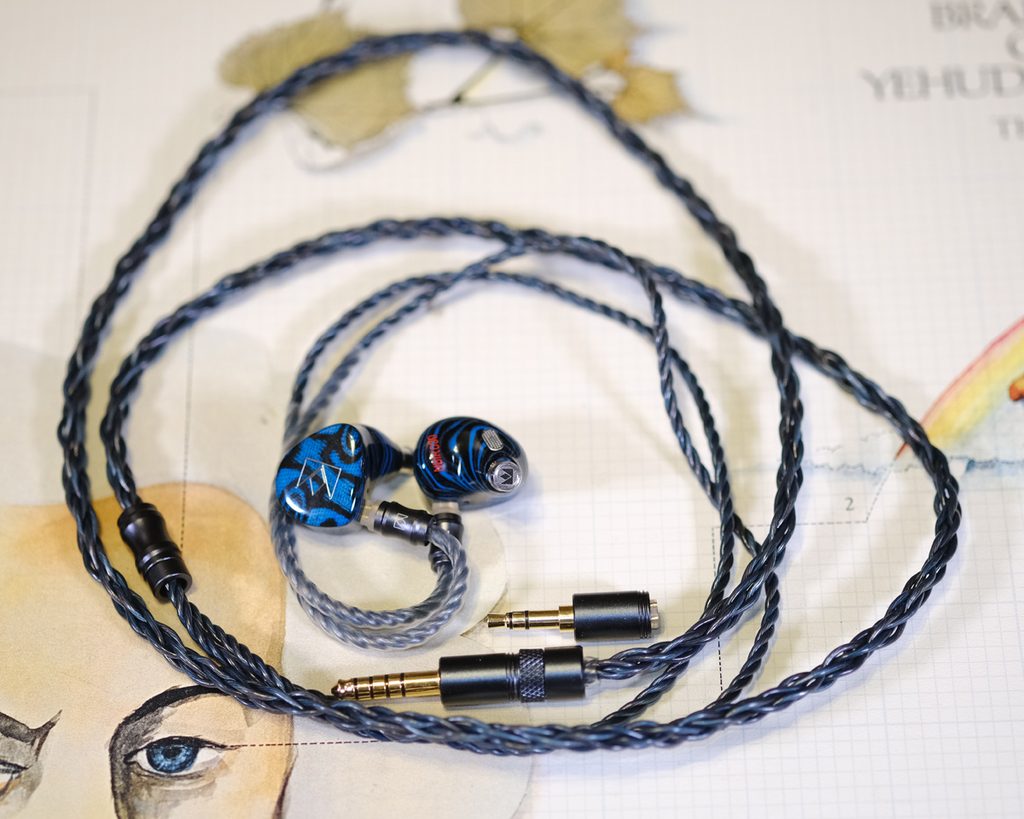
Encased in a blue CNC-machined custom Micarta shell inspired by the iris flower, the Noble Audio IRIS is a single dynamic driver in-ear monitor designed to maximize coherence, clarity, focus, and natural musical flow. Micarta is a composite material made from linen, canvas, paper, fiberglass, carbon fiber, or other fabrics integrated in a thermosetting plastic, creating a material much denser and with better acoustical properties than natural wood. Employing a 10.2mm custom three-layer diaphragm dynamic driver engineered for smooth movement, controlled low-frequency texture, and clear mid-to-high frequency performance, the IRIS is fitted with a dual neodymium iron boron magnet system to help maintain control and dynamic expression, within a triple sound chamber structure meant to refine airflow and acoustic response inside the housing. This is coupled with a 6-core OCC + SPC cable and replaceable 3.5mm / 4.4mm plugs.
Living with the Noble Audio IRIS In-Ear Monitor

Despite having been used at CanJam, I put a few hours on the Noble Audio IRIS In-Ear Monitor using my HIFIMAN GOLDENWAVE SERENADE DAC/Headphone Amplifier, as it has a 4.4mm TRRRS output, so when I began my listening tests, it was with this. Pulling up Qobuz, I selected “Show Me” (24-bit/96kHz – Qobuz) by Thao. The bass was tight and strong, with considerable impact from the bass drum, and the snare drum was crisp with shimmer from the beads that denoted it as being a real instrument.

Next up was Bob Dylan & The Rolling Thunder’s “The Rolling Thunder Revue 1976: Fort Collins Colorado, May 23rd (Live at Hughes Stadium, Colorado State University, Fort Collins, CO – May 23, 1976)” (24-bit/96kHz – Qobuz); the dynamics and soundstage were stage-edge in a large outdoor venue. Again, the bass presented a tight and powerful center for the music to wrap around.
I decided to scale up on amplification, or scale down depending on how you look at it, and use my favorite amplifier, the Schiit VALI2++Tube Hybrid Headphone Amp/Preamp, keeping the GOLDENWAVE SERENADE on as DAC, which required a quick switch to the single-ended 3.5mm TRS connector. Choosing “Ravel: Daphnis et Chloé & Stravinsky: Le sacre du printemps” (24-bit/96kHz – Qobuz) as performed by Rafael Payare conducting the Orchestre Symphonique de Montréal and Choeur de l’Orchestre Symphonique de Montréal. The dynamic range was epic and the soundstage massive. The tonal balance was extremely neutral with a possible uptick in the low treble, though this is a woodwind-heavy piece. While the celli and tympani were deep and resonant, the strings tended to the upper registers.

The bass was once again tight and forceful for the Disgusting Sisters’ “Skin & Blisters” (24-bit/44.1kHz – Qobuz), and the sticks upon the closed hi-hat were quick and precise, reproducing the micro detail of the pulses of the sizzle. As above, the soundstage was spacious.
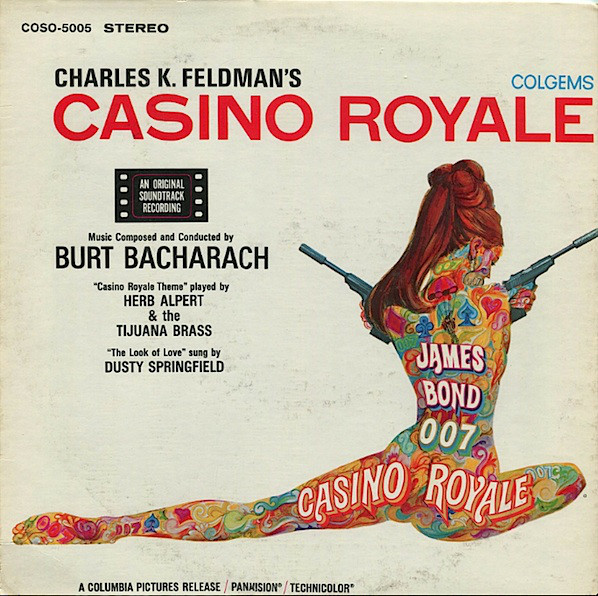
Moving on to my old trusty QPR2 DAP, I selected Dusty Springfield’s masterful rendition of Burt Bacharach’s “The Look of Love” (“Casino Royale” – 24-bit/192kHz) backed by Herb Alpert & The Tijuana Brass. Dusty’s voice was seductive and crystal in a huge nightclub, the sax was velvety and luscious against a rich piano, and the brass was dynamic yet not abrasive.

To test the sub-bass response, I connected the IRIS to my reference system: the dCS Bartók APEX DAC with Headphone Amplifier (as DAC ), Black Dragon USB Cable, Black Dragon Power Cables, and Core Power Technologies A/V Equi=Core 1000 and put on “Can-utility And The Coastliners” (DSD) from Genesis’ “Foxtrot”. The triangle rang out clearly against the noise of the electric instruments, and the bass pedals resonated deeply. The steel strings of the acoustic guitars were clearly enunciated, and the growl of the bass guitar stood out from the bass pedals.

Feeling that the IRIS was best served by tubes after my experience with the VALI2++, I broke out my Schiit Audio Lyr+ Fusion Architecture™ Headphone Amp and Preamp, connecting it to the Bartók APEX and looking for something more on the modern jazz front, selected Traffic’s eponymous track “Low Spark for High Heeled Boys” (16-bit/44.1kHz) from the album of the same name. It was like Steve Winwood was singing from his piano a few feet away in a large hall. Even with this low-resolution track, all the subtle resonances were there that denote an actual live piano over a modern electric emulator. Back in the background were the competing sounds of the sax and distorted Hammond. As well, Capaldi’s intricate percussion was clearly defined.

Peter, Paul, and Mary’s live rendition of “Blowing in the Wind” (DSD) from their 1964 album “In Concert” was so realistic in a massive auditorium, with guitars and acoustic bass up front and the singers just behind, allowing you to fully picture the four musicians up on a stage a handful of paces away with intimate and astounding dynamic range.

My last track was “Isn’t Life Strange” (“Seventh Sojourn” – The Moody Blues – DSD); everything was perfect, the mellotron, the flute, the guitar, the bass, the epic percussion, and the masterful vocals all in a luscious huge soundstage, with fantastic musicality; the IRIS definitely scaled up to the Bartók APEX without faltering.
Living with the Noble Audio IRIS In-Ear Monitor
Noble Audio never ceases to astound me, this time with the Noble Audio IRIS In-Ear Monitor in which they have wrung speed, detail, resolution, and linearity not normally found in a dynamic driver. Obviously, dynamic range was never a question with such technology, but tonal balance and bandwidth is a fine tightrope to walk with a single driver, much less a dynamic driver, which are known for their lethargy. Performing spectacularly with all forms of music, the IRIS did offer greater musicality and soundstage with tube sources, which is probably a byproduct of the extreme speed of the driver.
I would be remiss if I did not comment on the extreme beauty of the IRIS and attention to fine detail, including the blue on black simulated wood grain, the organic shape, the tuning vents, and the tiny crown logo on the ear nozzles. I also really appreciated the quick-change connector, allowing to quickly switch between balanced and single-ended, with everything clearly marked: a red serial number to delineate the right IEM, arrows to mark the correct alignment of the connector when switching, and the IEM side of the cable clearly marked with an L & R. The tiny size of the IRIS made it comfortable to wear without feeling unsecure.
I applaud Noble Audio for what is the best-sounding IEM under $1,000, which by definition makes it the best-sounding headphone in that price range, and I have no problem offering up a full, wholehearted recommendation for listeners who want their headphones to sound like music, real instruments in a real world.
$699.00 USD
Specifications:
- Single 10.2mm custom dynamic driver
- Three-layer diaphragm design
- Dual neodymium iron boron magnet system
- Triple sound chamber acoustic structure
- Blue CNC-machined custom Micarta housing
- 6-core OCC + SPC cable
- Replaceable 3.5mm and 4.4mm plugs
- 20Hz-20kHz frequency response
- 34 ohm impedance at 1kHz
- 113dB sensitivity at 1kHz
In the Box
- Noble IRIS IEMs
- 6-core OCC + SPC cable with 3.5mm and 4.4mm replaceable plug
- Ear tip set
- Quick Start Guide
- Warranty card

Want to join discussion?
Feel free to contribute!